
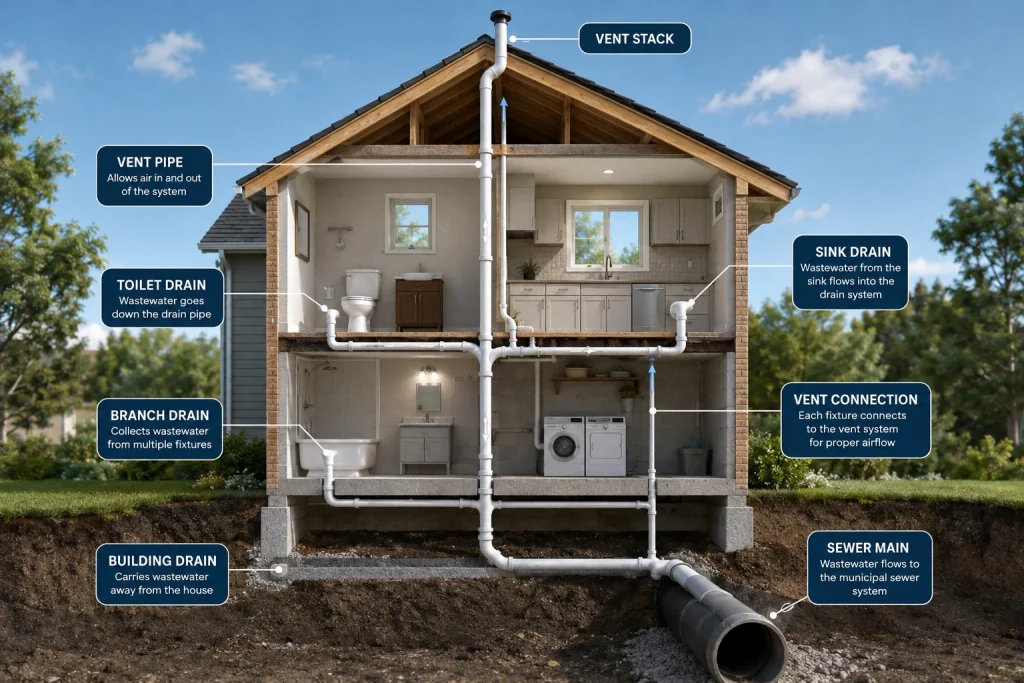
Say the word “plumbing” to most homeowners and they’ll picture the water supply side of things: pipes bringing clean water to a sink or a shower. Far fewer people know there’s a second system doing its work behind the walls at the same time. Its job isn’t to bring water in. It’s to get wastewater out, and to make sure sewer gas never finds its way back inside.
That second system is the DWV plumbing system. Drains, waste pipes, and vents all work together so wastewater keeps moving the right direction and air pressure inside the network stays reasonably even. When that pressure balance breaks down, a fixture stops draining cleanly and starts gurgling or backing up instead.
If you’ve caught yourself wondering what is DWV in plumbing, what is a plumbing vent, or why there’s a pipe poking up through your roof, you’re not the first. Most homeowners land on these same questions right after they notice a slow drain, a toilet that gurgles for no obvious reason, or a faint sewer smell that just won’t quit.
This guide covers the drain waste vent system: what plumbing vents are actually for, and how the whole thing fits together to keep a home’s plumbing running the way it should.
What Is DWV in Plumbing?
DWV stands for Drain, Waste and Vent. A DWV system handles the part of a home’s plumbing that carries wastewater away from fixtures while also letting fresh air into the drainage pipes. That’s different from a supply line, which pushes water through under pressure. DWV plumbing runs almost entirely on gravity and airflow — nothing here is being pumped through by force.
Three things have to happen for it to work: wastewater has to drain away from fixtures, sewage has to make it safely to the municipal sewer or a septic system, and sewer gases need to vent out while pressure inside the pipes stays balanced. Skip any one of these and even something as basic as a bathroom sink can start giving you trouble.
How the Drain Waste Vent System Works
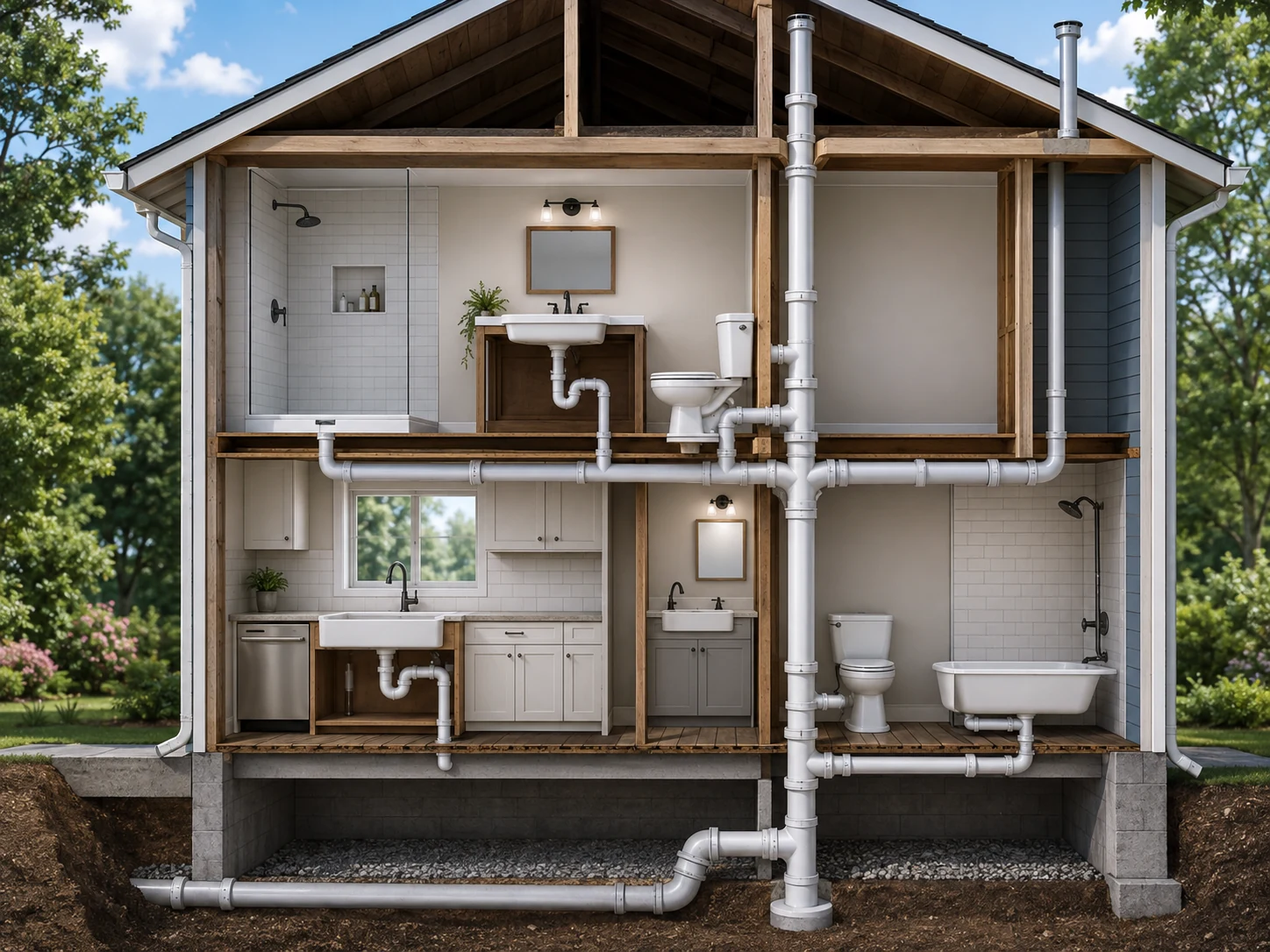
Break the drain waste vent system into its three parts and it stops being confusing.
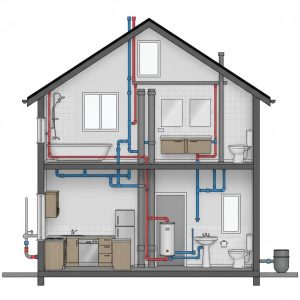
Start with drain pipes. They collect wastewater from kitchen and bathroom sinks, showers, tubs, toilets, washing machines, dishwashers — basically anything that uses water and needs to get rid of it. Each fixture connects to a drain pitched at a slight downward angle, just enough that gravity alone carries wastewater toward the building sewer.
Waste pipes take over from there. They gather the smaller branch drains and combine them into larger main lines as more fixtures feed in along the way. Bigger volume needs a bigger pipe — that’s really the whole rule.
Vent pipes work differently than either of those. They don’t carry a drop of wastewater. All they do is let air into the system so pressure doesn’t build up and choke off drainage somewhere down the line. Put the three together and you can see why the drain waste vent system acts like one connected network rather than three separate pieces that happen to share a wall cavity.
What Is a Plumbing Vent?
What is a vent in plumbing, exactly? Simply put, it’s a pipe that feeds fresh air into the drainage system. As wastewater moves through a drainpipe it creates pressure changes behind it, and if there’s no vent to release that pressure, things start going wrong: drainage slows down, water gets pulled right out of fixture traps, you hear that gurgling sound when a drain nearby empties, and sewer gas gets an opening to work its way into the house. A vent’s whole purpose is heading off that chain of problems before it starts.
What Is a Vent Pipe in Plumbing?
So what is a plumbing vent pipe, then? It’s a vertical pipe connected to the drainage system that runs up and out through the roof. It’s doing four things at once — letting outside air in, releasing sewer gases safely above the roofline instead of into your living room, keeping pressure steady inside the drainpipes, and stopping traps from siphoning dry. Take away the vent pipe and wastewater moving through the drain lines would create something close to a vacuum, which means fixtures downstream would struggle to drain no matter how clean the pipe itself is.
What Is Venting in Plumbing?
What is venting in plumbing? At its core, it’s the process of getting air into the drainage system while sending sewer gases safely outside instead of letting them build up indoors. Do it well and you get smooth water flow along with better indoor air quality — no bubbling toilets, no sluggish sinks, no lingering sewer odor, no P-traps running dry, no drainage backups showing up every few weeks. That’s the whole idea behind every modern plumbing venting system.
Components of a Plumbing Vent System
A full plumbing vent system is really a handful of parts, each doing its own job.
The vent stack is the big one — the main vertical vent pipe that runs through the roof. Plumbers usually just call it the plumbing vent stack. Its job is keeping air flowing continuously through the entire drainage network, and when a vent stack plumbing installation is sized correctly, several fixtures can drain at once without stepping on each other.
A drain vent is smaller. It ties an individual fixture back into the main vent stack, and it exists to protect nearby fixtures from each other’s pressure swings. Without one, draining a bathtub could pull water straight out of a nearby sink’s trap.
Some systems use a plumbing air vent too, better known as an Air Admittance Valve, or AAV. It’s not a traditional roof vent — it’s a mechanical device that lets air in while keeping sewer gas from escaping back into the house. Not every property has one. Whether it’s even allowed depends on local plumbing code, and that changes from one jurisdiction to the next.
Sanitary vent plumbing is a term for vent piping serving sanitary fixtures specifically — toilets, lavatories, bathtubs, showers. The job doesn’t change from any other vent in the system: keep the pressure balanced, keep the traps sealed.
Sanitary vent plumbing is a term for vent piping serving sanitary fixtures specifically — toilets, lavatories, bathtubs, showers. The job doesn’t change from any other vent in the system: keep the pressure balanced, keep the traps sealed.
Common Vent Problems in New York Homes
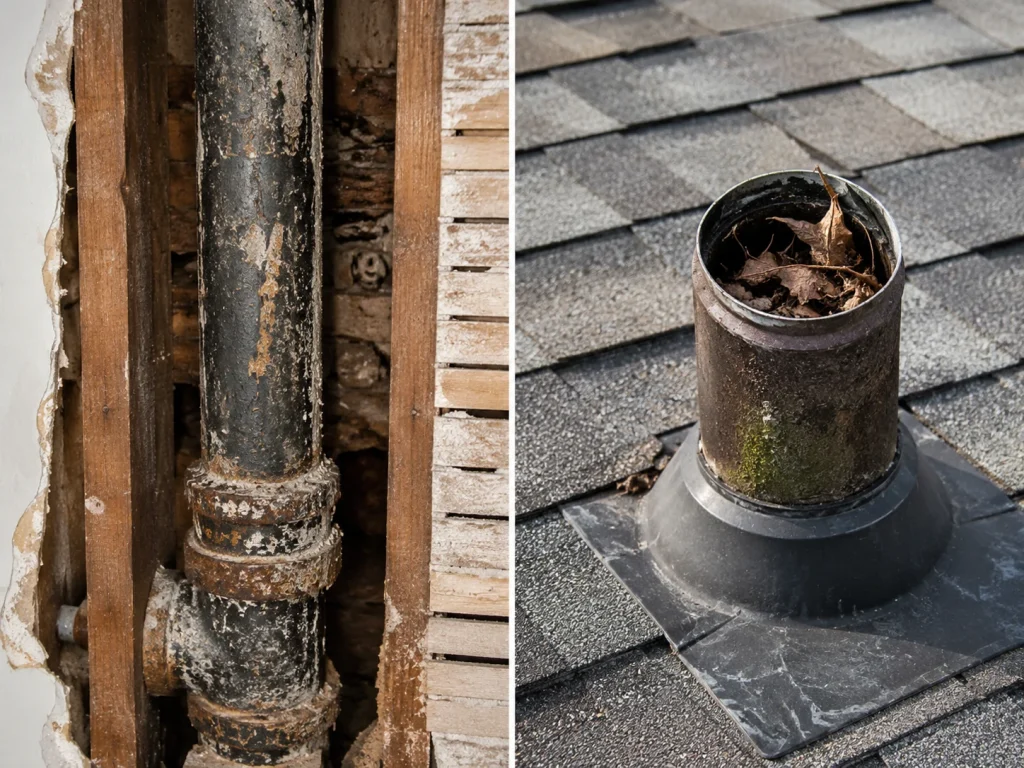
Older New York properties see more vent trouble than newer buildings do, and it’s mostly because so many of them have been renovated in pieces over the decades instead of built once and left alone. Walk into a prewar brownstone or a walk-up that’s changed hands — and layouts — several times, and it’s not unusual to find a vent stack that got rerouted during some past renovation nobody bothered to check against code.
The issues that come up most: blocked roof vent openings, cast iron vent stacks corroding from the inside after decades of use, older renovations that touched the venting without a permit, bird nests or debris that end up inside an open vent pipe, and roof vents that ice over or freeze shut in a hard winter. What makes all of this frustrating is that it usually looks like a drainage problem — slow sinks, a gurgling toilet — even though the drainpipe itself is completely clear. The real blockage sits upstream, at the vent.
When Should You Call a Licensed Plumber?
Bring in a professional if you notice sewer odors indoors, more than one drain running slow at the same time, a toilet that bubbles whenever a nearby sink runs, drain backups that just won’t stay fixed, water backing up into a tub or shower, or gurgling that seems to come from all over the house rather than one spot. A licensed plumber can check both the drainage and the vent side of things to actually find the cause instead of just patching the symptom.
Sometimes drain cleaning solves it. Other times you’re looking at sewer line repair or replacing a section of damaged vent piping. And if a leaking vent has let moisture soak into a wall somewhere, leak detection is usually worth scheduling before any repair work even starts.
How the DWV System Protects Your Home
A DWV plumbing system that’s working the way it should does more than just carry wastewater out of the building. It protects indoor air quality, the structural materials inside your walls, the fixtures themselves, and the water seals sitting inside every trap that are quietly keeping sewer gas where it belongs — outside.
Even a brand-new plumbing installation won’t perform correctly without proper venting behind it, which is exactly why a licensed plumber checks drainage and ventilation together whenever they’re diagnosing a problem that keeps coming back, rather than looking at just one side of it.
Conclusion
Once you understand what DWV in plumbing actually covers, the rest of the house makes a lot more sense. The drain waste vent system needs proper drainage, balanced airflow, and vent pipes installed the right way — all three, working together — to move wastewater out safely while keeping sewer gases from ever making it back indoors.
Knowing what a plumbing vent system does, what a vent stack is for, and where each vent pipe fits into the bigger picture makes it a lot easier to catch a small problem before it turns into an expensive one. Doesn’t matter if you’re in a brand-new build or an older NYC property with decades of renovations behind it — keeping both the drainage and venting sides of your plumbing in good shape is what keeps the whole system reliable.