
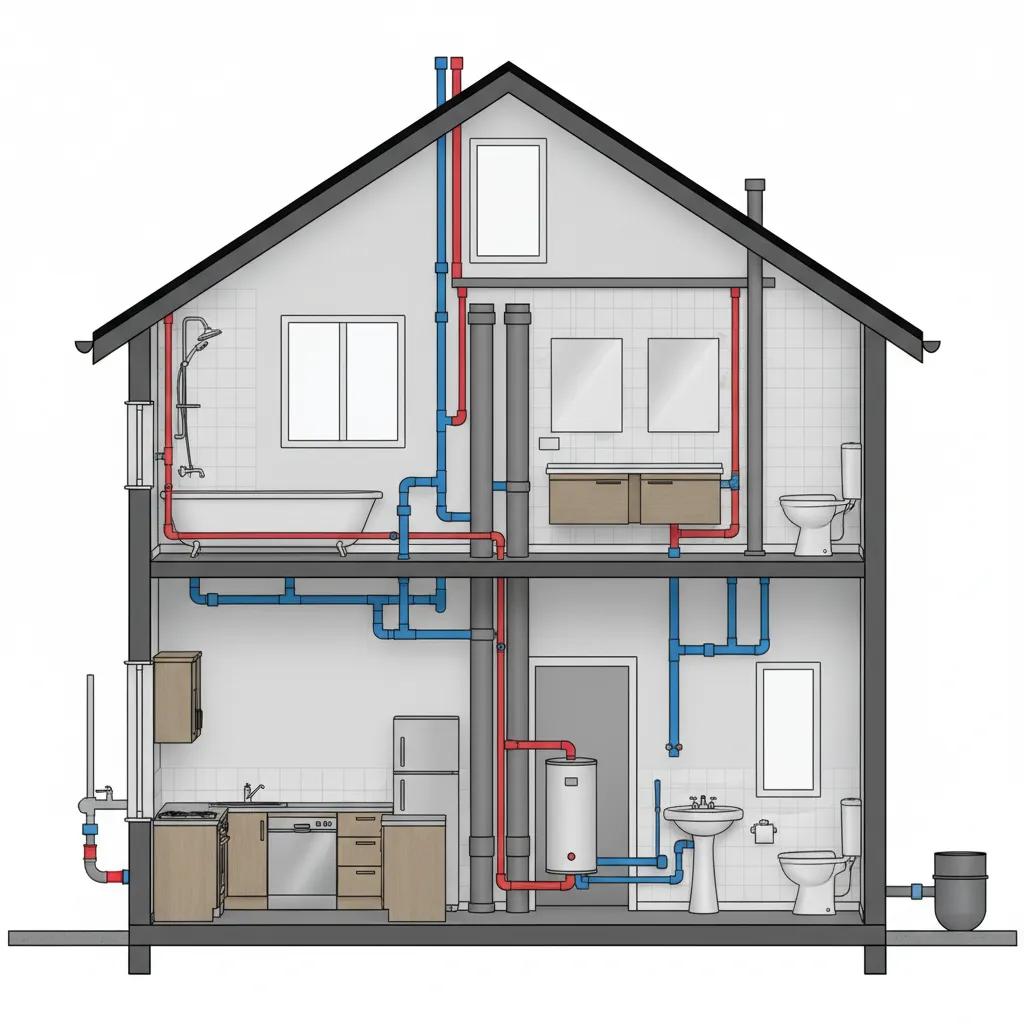
Nobody thinks about their plumbing until it stops cooperating. The faucet loses pressure out of nowhere. The toilet backs up at the worst possible moment. A pipe starts weeping behind a wall you haven’t opened in years. Once any of that happens, knowing what a plumbing system actually is and how it works makes it a lot easier to catch a problem early, figure out what’s worth fixing yourself, and know when it’s genuinely time to call someone.
A home plumbing system is really doing two jobs at once: getting clean water where you need it, and getting wastewater safely off the property. From the outside it looks simple — turn a knob, water comes out. Underneath that simplicity, though, is a set of parts that all have to work together, every single day, without anyone giving them a second thought.
This guide walks through how a plumbing system works, breaks down the major parts of a residential plumbing system, and covers the plumbing basics worth knowing. That’s especially true if you own property in New York, where building age and hard winters cause problems most other markets barely deal with.
What Is a Plumbing System?
Homeowners ask this more than you’d think: what is the plumbing system actually referring to in a house?
At its core, it’s the network of pipes, valves, fixtures, drains, vents, and appliances that brings fresh water into a home and carries wastewater out — either to the municipal sewer, or, less commonly outside the five boroughs, to a private septic system.
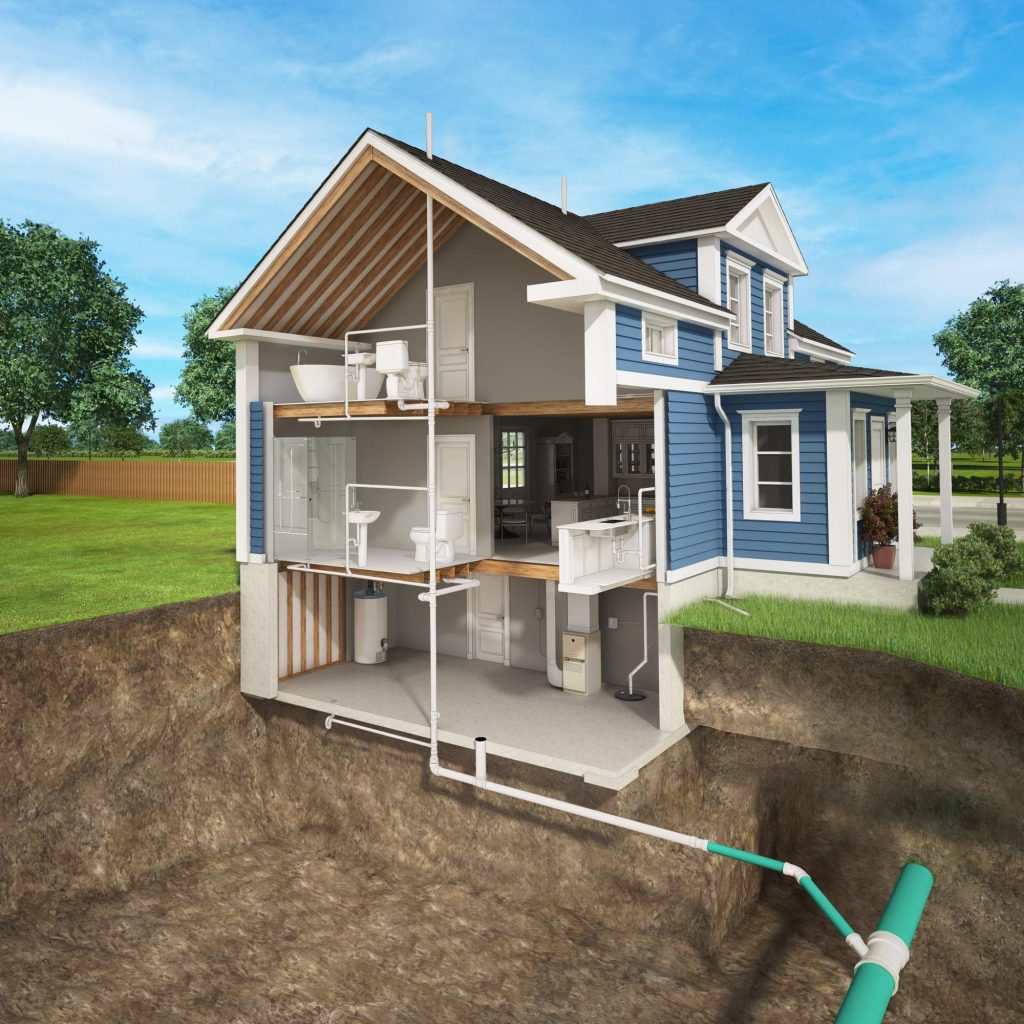
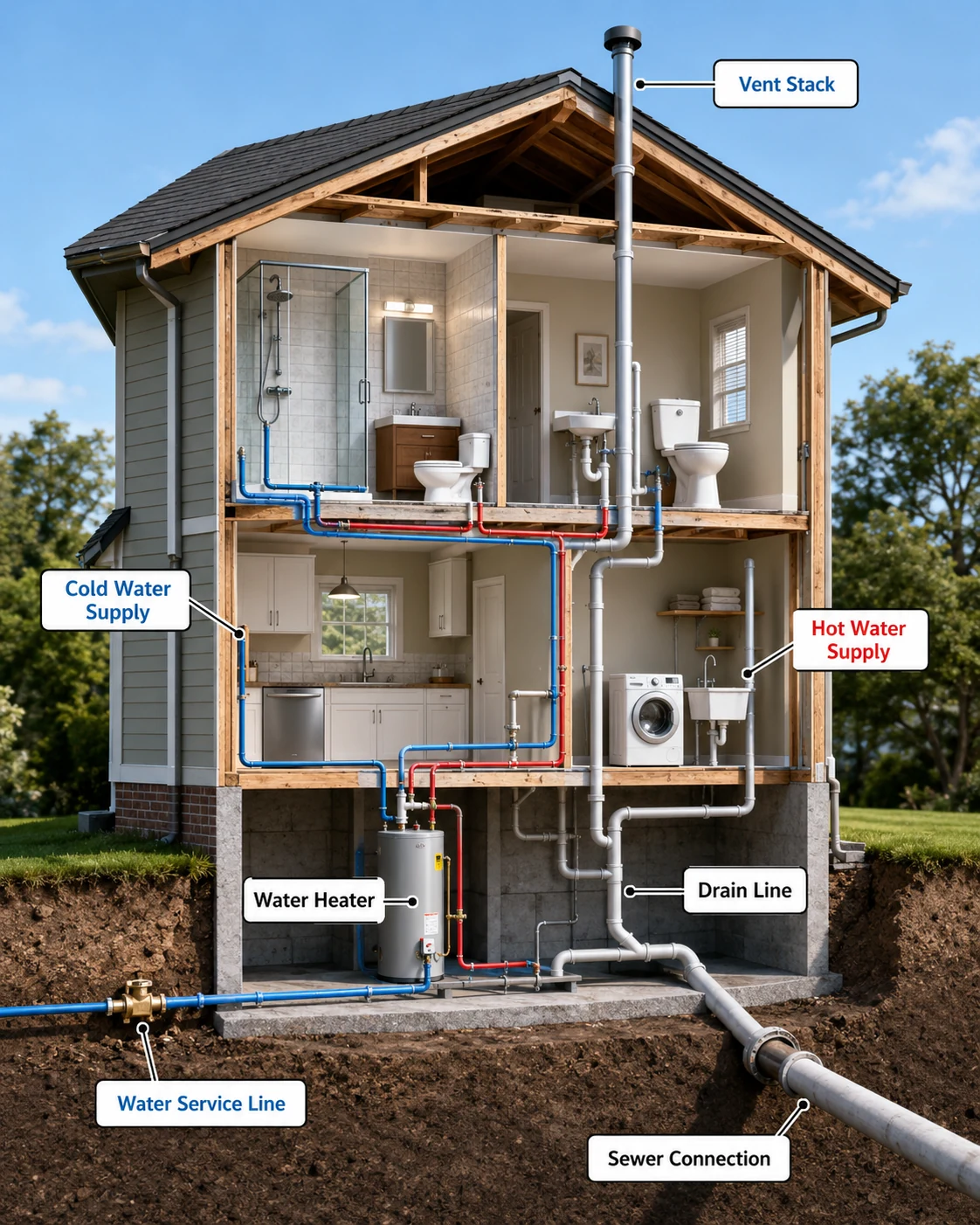
A complete house plumbing system is really two systems running side by side, never touching. One is the water supply system, delivering pressurized fresh water to sinks, showers, toilets, appliances, and outdoor spigots. The other is the drainage, waste, and vent system — DWV for short — which relies on gravity to carry wastewater away. Keeping those two fully separate isn’t some minor design detail. It’s basically the whole point of the plumbing code.
How Does a Plumbing System Work?
Easiest way to understand it: just follow the water from the moment it enters the building to the moment it leaves.
Step 1: Water Enters the Home
Fresh water arrives through the main water service line. Most New York properties run on treated municipal water — private wells are really only a thing well outside the city, out on parts of Long Island or upstate. Before that water reaches anything you’d actually use, it usually passes through the main shut-off valve, a water meter if one’s installed, and a pressure regulator if the building has one. Only after that does it move into the supply pipes that fan out through the rest of the house.
Step 2: Water Travels to Fixtures
Cold water goes straight to whatever fixture needs it. Anything requiring hot water gets routed through the water heater first, then on to kitchen sinks, bathroom faucets, showers, tubs, washing machines, dishwashers. The water stays under pressure the whole way, which is why it starts flowing the second you open a valve instead of trickling out. If hot water isn’t showing up the way it should — weak flow, lukewarm at best, running out fast — that’s usually the sign to schedule water heater repair before it starts putting strain on the rest of the system.
Step 3: Wastewater Leaves the House
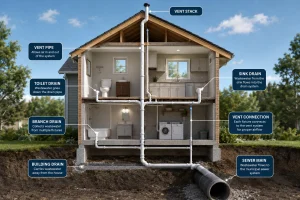
Once the water’s been used, gravity takes over. Drainpipes carry wastewater from sinks, showers, tubs, and toilets toward the building drain and out through the main sewer line. Drainpipes aren’t pressurized like supply pipes are; they’re installed at precise slopes calculated to let waste flow out on its own. That’s exactly why a drain line that’s been disturbed or improperly pitched during a renovation can slow things down even when nothing is technically clogged. This split between pressurized supply and gravity-fed drainage is one of the plumbing basics that explains a lot of what goes wrong in older buildings.
Main Components of a Home Plumbing System
Every plumbing system in a house comes down to a handful of core parts working together.
Water Supply Pipes
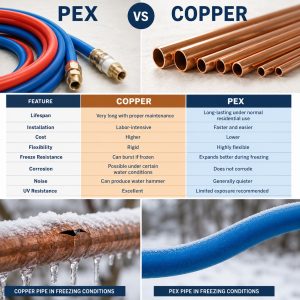
These carry clean water throughout the home. Newer construction usually runs on copper, PEX, or CPVC. A lot of older New York buildings, though, still have sections of galvanized steel piping from decades back, and that stuff corrodes from the inside. It’s why water pressure in an old building sometimes drops gradually over years instead of failing all at once.
Plumbing Fixtures
Fixtures are the parts you actually touch — toilets, sinks, showers, bathtubs, faucets, outdoor hose bibs. Every one of them connects to both the supply system and the drainage system at the same time, which is part of why replacing even one fixture can turn into a bigger job than expected.
Drain Pipes
Drainpipes handle wastewater removal, and again, they rely entirely on gravity rather than pressure. Common materials are PVC, ABS, and — especially in older NYC buildings — cast iron, which tends to build up scale on the interior walls over the decades and gradually narrows how much water can actually pass through. If drains throughout the house start slowing down at once, rather than just one fixture, that’s usually a sign of a bigger blockage further down the line. Professional drain cleaning tends to be the smarter move before it turns into an actual backup.
Plumbing Vents
Most homeowners don’t realize their plumbing includes air pipes as well as water pipes. Vent stacks run up through the roof and let air into the drainage system. Sounds minor. It isn’t. Without proper venting, drains empty slowly, toilets gurgle when they flush, sewer odors work their way back into the home, and water traps under sinks can lose the seal that’s supposed to block those odors in the first place. Ventilation is one of the least visible parts of a basic plumbing system — and one of the most consequential when it’s missing or blocked.
What Is Indoor Plumbing?
What is indoor plumbing, specifically? It’s the water supply and drainage components located inside the home itself: interior water lines, bathroom and kitchen plumbing, laundry connections, water heaters, shut-off valves, drainpipes, vent stacks. The municipal water main and the sewer connection outside the building are separate infrastructure, but they tie directly into everything just described.
What Is Plumbing Work?
Another one homeowners ask a lot: what is plumbing work, exactly? It covers installing, repairing, replacing, and maintaining any part of a home’s plumbing system — pipe installation, leak repairs, fixture replacement, water heater installation, drain cleaning, sewer line repair, pipe inspections, emergency service. Small stuff, like swapping a showerhead or tightening a loose faucet connection, is usually within reach for a handy homeowner. Anything touching a supply line, a drainpipe, or a hidden leak behind a wall is a different story, and it belongs to a licensed plumber.
What Is a Closed Plumbing System?
Plumbers bring this term up most often during water heater installations. A closed system stops water from flowing backward into the municipal supply, using devices like backflow preventers, check valves, or pressure-reducing valves that only allow flow in one direction. That protects water safety, sure, but it also creates a side effect: pressure builds up as heated water expands with nowhere to go. That’s why so many closed systems need an expansion tank near the water heater. Skip it, and that pressure has to go somewhere — usually the weakest joint in the system, and that’s the one that gives first.
Common Plumbing Problems in New York Homes
Every plumbing system wears down eventually, but New York’s housing stock runs into certain issues more than most places do, mostly just because of how old a lot of it is. Aging galvanized pipes, frozen lines in winter, mineral buildup, shut-off valves that corrode and seize from disuse, tree roots working into old sewer lines, hidden leaks behind plaster walls, worn-out faucet cartridges — all of this shows up constantly in service calls across the city.
Brownstones and older apartment buildings often have layouts that don’t match anything in a modern plumbing manual, which is exactly why a proper diagnosis from someone who’s actually worked on buildings from that era matters more than it would in new construction. If your water bill has crept up for no obvious reason, or you’re noticing damp patches on a wall or ceiling, it’s worth scheduling leak detection before that hidden problem turns into a real repair bill.
Plumbing Maintenance Every Homeowner Should Do
Routine maintenance is what keeps small problems small. Check exposed pipes for corrosion or condensation twice a year. Test your shut-off valves now and then so they don’t seize up right when you need them most. Keep an eye on drains that seem slower than usual, and fix small leaks the moment you spot them instead of putting it off.
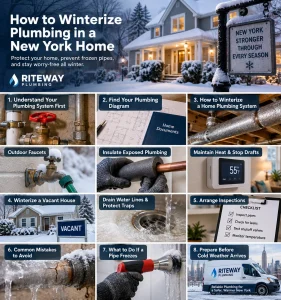
Insulate exposed pipes in unheated areas before the first hard freeze, keep grease out of the kitchen drain, and know exactly where your main water shut-off valve is before you’re ever forced to go looking for it in a hurry. None of this costs much or takes long, and all of it beats dealing with water damage after a pipe actually bursts.
When Should You Call a Licensed Plumber?
Some plumbing problems just can’t wait for a convenient time. Call a licensed plumber if there’s no water anywhere in the house, multiple drains clogged at once, a sewage backup, a burst pipe, water stains spreading across a ceiling, a toilet that won’t stop running no matter what you try, low pressure hitting every fixture in the home, or a water heater that’s failed outright.
Getting someone out fast in these situations is often the difference between a repair and a much bigger structural mess. Depending on what they find, your plumber might also bring up pipe repair, sewer line repair, toilet repair, or emergency plumbing to get things back to normal safely.
Conclusion
Understanding how a plumbing system works makes it a lot easier to catch trouble before it becomes a major repair. A household plumbing system depends on a balance — clean water delivery, proper drainage, ventilation that actually works. When all three are doing their job, the whole home runs more efficiently and more quietly than most people ever notice.
Knowing the plumbing basics also makes it easier to talk to a contractor without feeling out of your depth, spot early warning signs before they turn into emergencies, and make smarter calls about maintenance versus replacement. Whether you’re in a century-old brownstone or a newer build outside the city, keeping your residential plumbing system in good shape protects both the property and everything you’ve put into it.
Regular inspections, quick repairs, and professional maintenance are still the most reliable way to keep a home plumbing system running the way it should for years.