
Winter in New York can be hard on residential plumbing. Pipes in basements, garages, crawl spaces, exterior walls, and other poorly heated areas are especially vulnerable. If water freezes inside a pipe, the resulting pressure can damage the pipe or its fittings. The leak may remain hidden until the ice thaws and water starts flowing again.
Knowing how to winterize plumbing before temperatures drop can help prevent burst pipes, water damage, and emergency repairs. However, winterizing an occupied home is different from preparing a vacant property. In most occupied houses, the goal is to protect vulnerable lines and maintain heat. A vacant home may need its water supply shut off and the plumbing professionally drained.
Understand Your Plumbing System First
Before working on the system, locate the main water shutoff, water meter, outdoor faucet valves, water heater, boiler, and appliance connections. If possible, label the valves so they can be found quickly during an emergency.
Test accessible shutoffs carefully, but do not force a valve that is stuck or badly corroded. An old valve can start leaking or break when turned.
How Do I Find the Plumbing Diagram for My House?
Start with the documents received when the property was purchased or renovated. Architectural plans, permits, inspection records, and contractor drawings may contain information about the original plumbing system. Previous owners, building managers, architects, or contractors may also have copies.
For a New York City property, some plans and job records may be available through the Department of Buildings. Owners can search the DOB NOW Public Portal or the Buildings Information System and request available drawings.
Keep in mind that an old plan may not reflect later remodeling. Older New York homes often have pipes, fixtures, or appliances that were relocated after the original plans were prepared.
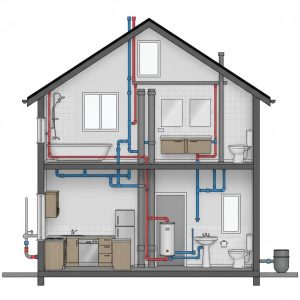
How to Find the Plumbing Layout of My House Without Plans
If no reliable plans exist, follow visible pipes from the water meter or main shutoff toward fixtures and appliances. Note where lines enter walls, floors, and ceilings. Do not open finished surfaces simply to trace concealed plumbing.
A licensed plumber can inspect the system, locate important valves, and create a practical plumbing map. This is particularly useful when winterizing an older house or preparing a property that will remain empty.
How to Winterize a Home Plumbing System
In an occupied home, winterization usually focuses on outdoor connections, exposed pipes, drafts, and heating. The following steps explain how to winterize home plumbing without unnecessarily draining the entire system.
Inspect Pipes in Cold Areas
Begin in basements, garages, crawl spaces, attics, utility rooms, and cabinets along exterior walls. Look for damaged insulation, corrosion, moisture, old repairs, and cracks that allow cold air to reach the plumbing.
Pay close attention to the point where the main water line enters the building. Pipes installed near exterior walls or unsealed openings may freeze even when the rest of the room feels warm.
Repair active leaks before installing insulation. Wet materials provide less protection and may conceal corrosion or damage.
Prepare Outdoor Faucets
Disconnect, drain, and store garden hoses before freezing weather arrives. A connected hose can trap water inside the faucet or the pipe behind it.
If an exterior faucet has a separate indoor shutoff, close that valve and then open the outdoor faucet to drain the remaining water. Leave it open unless the fixture manufacturer recommends a different procedure.
Do not assume a frost-resistant faucet is completely protected. It still needs room to drain, and an attached hose can prevent that from happening. Irrigation systems should be prepared according to the manufacturer’s instructions or by a qualified professional.
Insulate Exposed Plumbing
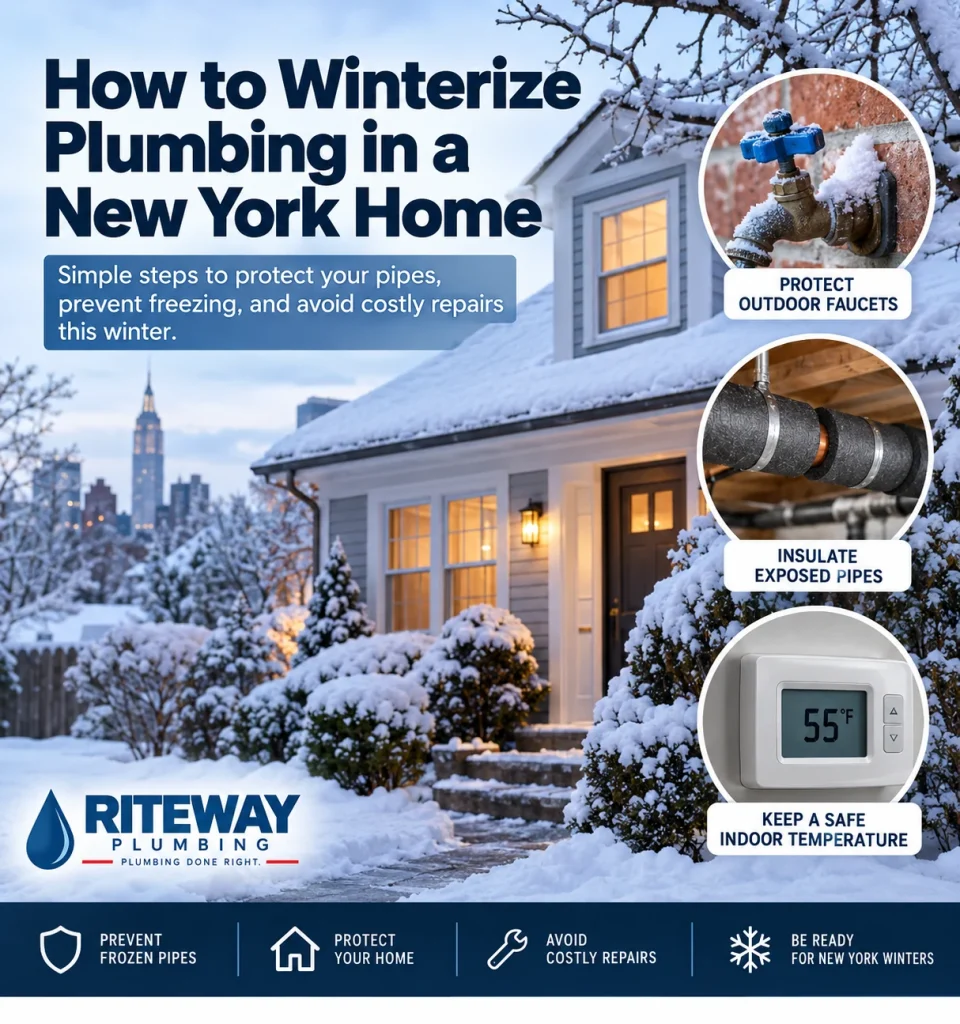
Install foam sleeves or another suitable insulation material around accessible hot- and cold-water pipes in unheated areas. Fit the insulation closely and protect elbows, joints, and valves where practical.
Insulation slows heat loss but does not generate warmth. It cannot fully protect plumbing if a basement window remains open or the heating system stops working for a long period.
Listed heat cable may be suitable for certain exposed lines. Use a product approved for the pipe material and location, and follow the manufacturer’s installation instructions. Improperly installed heating cable may create a fire or electrical hazard.
Stop Drafts and Maintain Heat
Repair broken windows, replace damaged weatherstripping, and seal appropriate gaps near plumbing. Be careful not to block combustion-air openings, appliance vents, or ventilation required for a boiler or water heater.
During severe cold, open sink cabinets located along exterior walls so heated room air can reach the pipes. Move household chemicals out of the reach of children and pets before leaving cabinet doors open. Keep garage doors closed if water lines run through the garage.
Do not turn off the heating system while the plumbing remains full. The American Red Cross recommends leaving the thermostat set no lower than 55°F when a home is unoccupied during cold weather. A property with uneven heating or poorly insulated rooms may require a higher setting.
A temperature sensor or water-leak detector can provide an early warning, but monitoring devices do not replace maintenance or regular inspections.
How to Winterize Plumbing in a Vacant House
Learning how to winterize a house plumbing system for an extended vacancy requires additional planning. Since no one is present to notice a leak, it may be appropriate to shut off the main water supply and drain the domestic plumbing.
Closing the main valve alone is not enough. Water can remain inside branch lines, appliance valves, toilet components, filters, water heaters, and outdoor faucets.
Drain the Domestic Water Lines
A complete procedure may involve closing the correct supply valve, opening selected faucets to relieve pressure, and draining the system from its lowest accessible point. Toilet tanks, washing-machine hoses, dishwasher connections, refrigerator lines, filters, and other water-fed equipment must also be considered.
Some sections may hold water because they do not slope toward the drain. Plumbers sometimes use compressed air to clear certain lines, but excessive pressure can damage fixtures, valves, and appliances. It should not be attempted without suitable equipment and knowledge of the system.
Water heaters require special care. Follow the manufacturer’s shutdown instructions before draining a tank. Hot water can cause burns, and an electric water heater may be damaged if its heating elements operate while the tank is empty.
Protect Traps and Heating Equipment
Sink, shower, toilet, and floor-drain traps normally hold water to prevent sewer gases from entering the house. In an unheated building, that water may freeze.
Where appropriate, a plumber may use a non-toxic product specifically labeled for plumbing or recreational-vehicle systems. Automotive antifreeze is toxic and must never be added to household plumbing or potable water lines.
Domestic plumbing and heating pipes are not necessarily part of the same system. A hydronic boiler contains water that circulates through the building. Draining or switching it off incorrectly can damage the equipment and remove the heat needed to protect the property.
Fire sprinklers, shared risers, boilers, automatic water feeders, and similar systems should not be disabled without professional guidance. In a condominium, cooperative, or multifamily property, speak with building management before operating any main valve.
Arrange Inspections While the House Is Empty
Even a winterized property should be checked periodically. Ask a trusted person or property manager to confirm that the heating system is working, indoor temperatures remain safe, sump pumps have power, and no leaks have developed.
Provide that person with the location of the main shutoff and contact information for a plumber. Remote temperature and leak sensors offer additional protection, but an in-person inspection can reveal problems that a sensor may not detect.
Mistakes That Leave Plumbing Exposed
One of the most serious mistakes is turning off the heat while leaving water lines full and pressurized. If a pipe freezes and splits, water can escape as soon as the ice begins to thaw.
Another common mistake is closing the main valve without draining the system. This limits the amount of new water entering the property, but it does not remove water already trapped in the pipes.
Homeowners may also forget outdoor hoses, appliance supply lines, toilet tanks, or plumbing in remote parts of the building. Others rely entirely on pipe insulation, even though insulation cannot compensate for a prolonged heating failure.
Attempting to drain a boiler together with the domestic plumbing can create additional problems. Heating equipment, fire protection, and shared building systems require separate procedures.
What to Do If a Pipe Freezes
A faucet that produces only a trickle during freezing weather may indicate a frozen supply line. Find the main shutoff and inspect accessible plumbing for cracks, swelling, or leaking connections.
Keep the affected faucet open and apply gentle heat with a hair dryer, electric heating pad, or warm towels. Begin near the faucet and move gradually toward the frozen section. Never use a blowtorch, candle, or another open flame.
If the frozen area is concealed, cannot be reached safely, or has already cracked, shut off the water and call a licensed plumber. Check other faucets as well, since more than one line may be frozen.
Prepare Your Plumbing Before Cold Weather Arrives
The best time to learn how to winterize house plumbing is before the first freeze. Early preparation gives you time to repair faulty valves, insulate exposed lines, drain outdoor faucets, and decide whether a vacant property requires a complete shutdown.
If you cannot locate the main shutoff, do not have an accurate plumbing plan, or need to prepare a boiler, water heater, or vacant building, contact Riteway Plumbing for professional plumbing service in New York. A qualified plumber can inspect vulnerable areas and prepare the system before cold weather leads to an expensive emergency.